Marriott began in 1927 when J. Willard and Alice Marriott, with business partner Hugh Colton, opened a nine-seat A&W root beer stand in Washington, D.C. Their restaurant business grew into Hot Shoppes, and in 1957 the company opened its first hotel, the Twin Bridges Motor Hotel in Arlington, Virginia. As of September 30, 2026, Marriott International reported 10,241 properties worldwide, including branded residences and other lodging products.

Thirty years passed between the first glass of root beer and the first hotel check-in. In between, the company learned to serve motorists without asking them to leave their cars and to get meals onto airplanes on time. By the time it opened Twin Bridges, the Marriotts had spent three decades figuring out what people needed when they were away from home.
Marriott history timeline
1927 · J. Willard and Alice Marriott and Hugh Colton open a nine-seat A&W root beer stand in Washington, D.C.
1928 · Hot Shoppes expands into drive-in dining.
1937 · Hot Shoppes begins supplying meals to airlines.
1957 · Twin Bridges Motor Hotel opens in Arlington, Virginia, as Marriott’s first hotel.
1983 · Marriott launches Courtyard for business travelers.
1984 · The first JW Marriott opens in Washington, D.C.
1987 · Marriott introduces Fairfield Inn and acquires Residence Inn.
1993 · Marriott Corporation separates into Marriott International and Host Marriott Corporation.
1997 · TownePlace Suites launches as an extended-stay brand.
2016 · Marriott acquires Starwood Hotels & Resorts, bringing Sheraton, Westin and other brands into its portfolio.
2019 · Marriott introduces Marriott Bonvoy as its unified loyalty program.
2026 · Marriott reports 10,241 properties across its worldwide system as of September 30.
How did Marriott go from root beer to hotels?
The root beer stand had a seasonal problem. A cold drink made sense in a Washington summer, but the business needed a reason for customers to come back when the weather turned. The Marriotts added hot food, and the Hot Shoppes restaurant business took shape. Alice Marriott helped build the business, contributing to the menu and restaurant operations.
By 1928, Hot Shoppes was serving motorists at their cars. In 1937, the company started supplying meals to airlines at Washington’s Hoover Airport. Airline catering made timing part of the service. A meal had to be ready when the plane was ready to leave.
In January 1957, Marriott opened the 370-room Twin Bridges Motor Hotel. An adjacent Hot Shoppe meant the company could give motorists a place to eat and a room for the night. Marriott opened a second hotel, Key Bridge Motor Hotel, in 1959. In 1981, it reached 100 hotels with the opening of the Maui Marriott Resort.
Why did Marriott create so many hotel brands?
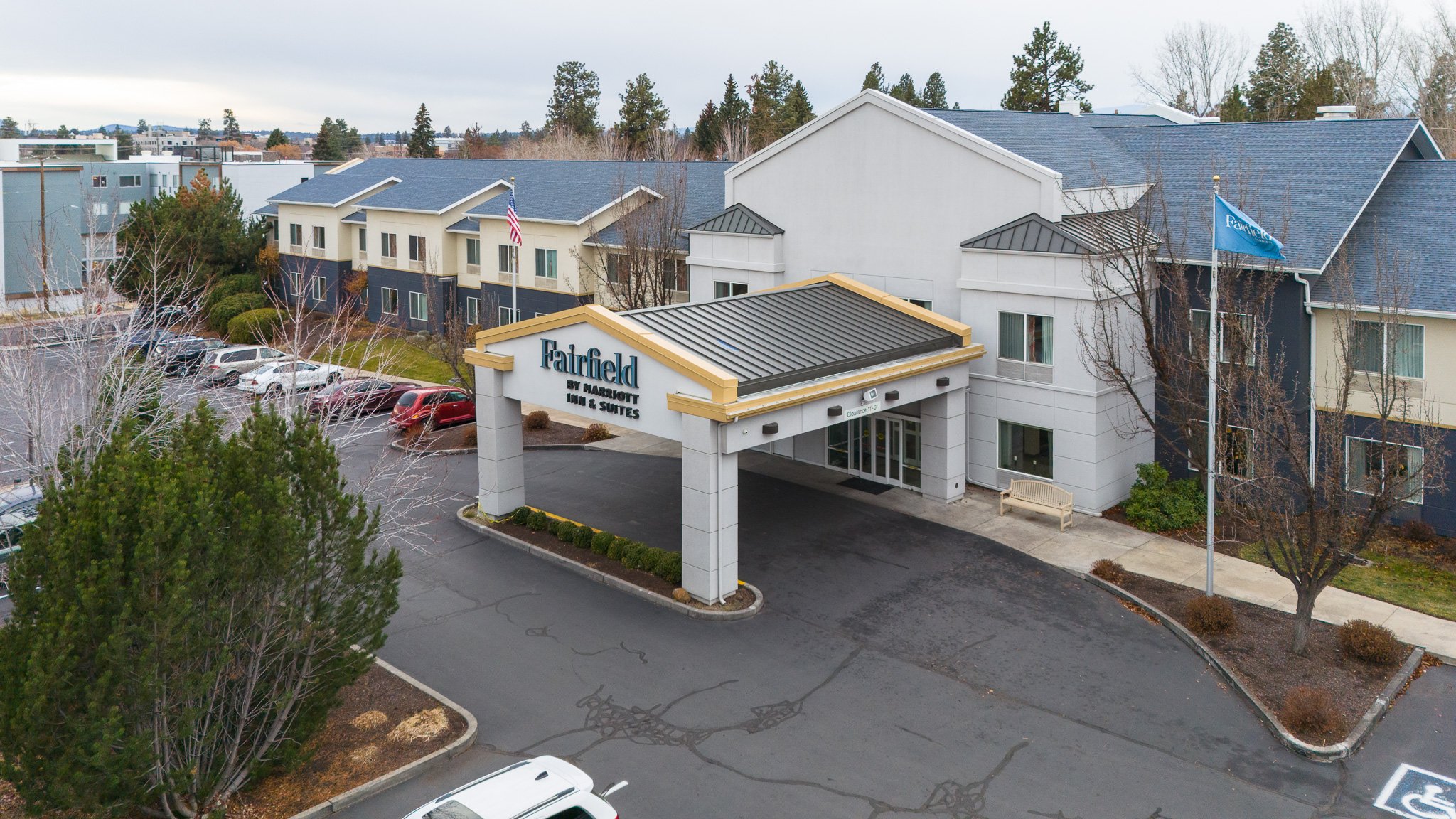
A traveler with a morning meeting and a family staying for two weeks make different demands on a hotel. Marriott began designing brands around those differences. Courtyard, launched in 1983, focused on business travelers. The first JW Marriott opened in 1984 and took the family name into luxury lodging. Fairfield Inn, introduced in 1987, served travelers looking for a straightforward stay, while Residence Inn, acquired that same year, served guests who needed to settle in for longer. TownePlace Suites added another extended-stay option in 1997. For a look at one of these brands in practice, see TNB’s Fairfield opening in Airdrie, Alberta.
Courtyard by Marriott · A work trip where space to work and unwind matters
Fairfield by Marriott · A short stay where the essentials matter most
TownePlace Suites by Marriott · A longer visit where an in-suite kitchen is useful
Residence Inn by Marriott · An extended stay with space for everyday routines
Sheraton · A conference, group trip or full-service stay
Four Points by Sheraton · An airport overnight or a business trip
JW Marriott · A luxury stay or special occasion
Marriott expanded its brand portfolio again in September 2016 when it acquired Starwood Hotels & Resorts. The deal brought in Sheraton, Westin, W Hotels, St. Regis and Four Points by Sheraton, among others. In 2019, Marriott Bonvoy brought Marriott Rewards, Starwood Preferred Guest and The Ritz-Carlton Rewards under one name. A guest could earn points on a work trip at one participating brand and use them on a vacation at another.
Who actually owns Marriott hotels?
Many Marriott-branded hotels are owned by independent companies. Marriott manages some hotels under agreements with their owners. Others operate under franchise agreements, with the brand providing standards and access to systems such as reservations and loyalty. The property owner is responsible for investment in the building, while the operator runs the hotel day to day. One company can fill both roles.
The distinction became especially important in 1993, when Marriott Corporation split into Marriott International and Host Marriott Corporation. The separation helped set the course for a business centered on management and franchising. Independent owners could develop or convert a property under a recognized brand, while Marriott could expand through agreements with those owners.
What a Marriott conversion looks like in practice
When TNB Hotels acquired a Comfort Inn near Salt Lake City International Airport in 2018, the airport location already gave travelers a reason to stay nearby. The question was what the hotel had to offer them. We chose Four Points by Sheraton and updated guest rooms, redesigned the lobby and gathering areas, improved Wi-Fi, and expanded food and beverage offerings.
That project illustrates a decision hotel owners face well before a new sign goes up. The brand has to fit the market, and the building and operating team have to be able to deliver what guests expect from it. The work spans everything from the condition of the rooms to what someone arriving after a long travel day can eat.
Read how TNB converted a Comfort Inn into Four Points by Sheraton.
Frequently asked questions about Marriott’s history
Who founded Marriott, and when?
Marriott traces its founding to 1927, when J. Willard Marriott and Alice Sheets Marriott opened an A&W root beer stand in Washington, D.C., with business partner Hugh Colton.
What was the first Marriott hotel?
The first Marriott hotel was the 370-room Twin Bridges Motor Hotel in Arlington, Virginia. It opened in January 1957 next to a Hot Shoppe restaurant.
When did Sheraton become part of Marriott?
Sheraton joined Marriott International in September 2016 through Marriott’s acquisition of Starwood Hotels & Resorts. The deal also brought in Four Points by Sheraton, Westin, W Hotels and St. Regis.
What is the difference between Marriott International and Marriott Bonvoy?
Marriott International is the company behind the hotel brands. Marriott Bonvoy is its loyalty program for participating properties and experiences.
How many properties does Marriott have?
Marriott reported 10,241 properties and 1,833,801 rooms worldwide as of September 30, 2026. The systemwide count includes hotels, branded residences, timeshares and other lodging products.
When does Marriott turn 100?
Marriott marks 100 years in 2027, a century after the Washington, D.C., root beer stand opened.
Explore TNB Hotels
TNB Hotels is an independent hotel ownership and development company with Marriott- and IHG-branded properties in the United States and Canada. Explore our hotel portfolio to see how brands such as Fairfield, TownePlace Suites and Sheraton serve different markets. For questions about hotel development or ownership, connect with the TNB Hotels team.